Press


Sea of olives

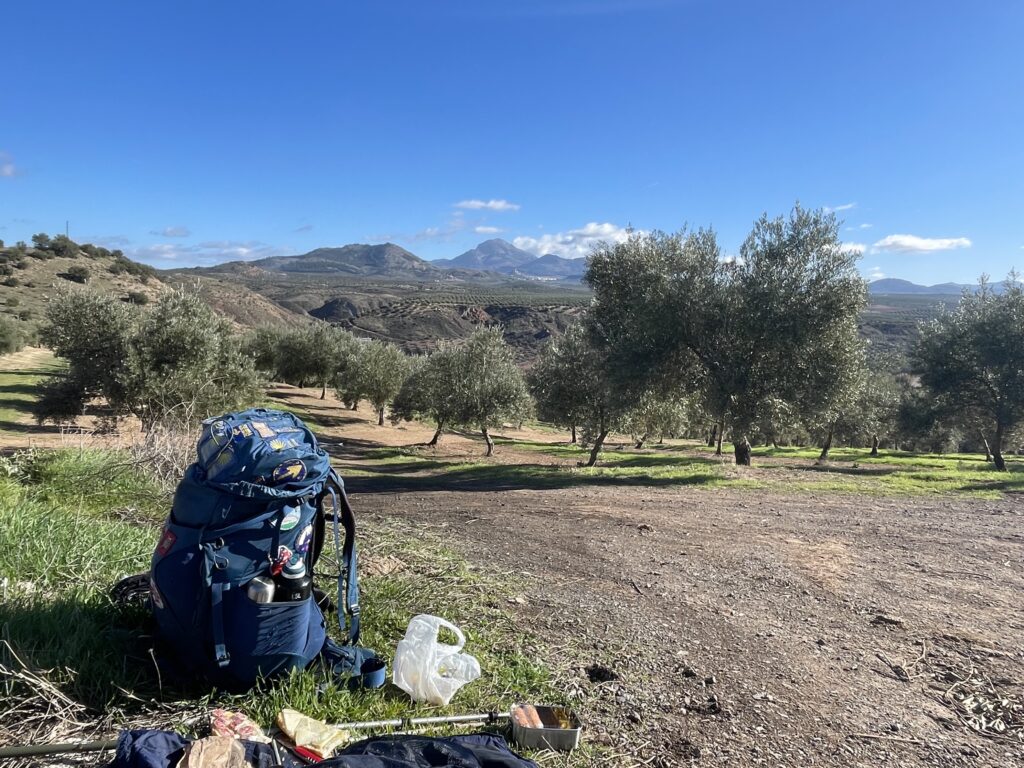
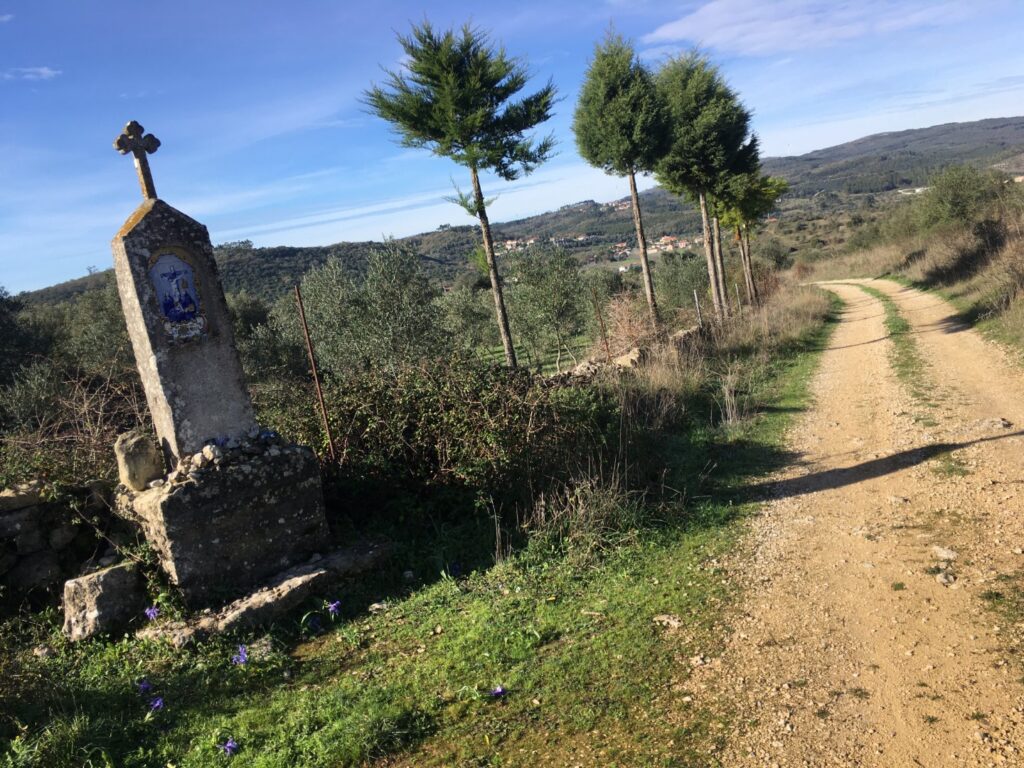
Doing the Camino you find endless picturesque spots for a lunch break. But this view and setting has to be one of the most inspiring and satisfying: looking back 7 kilometres over endless olive trees to the town of Alcaudete, quietly sitting in the lee of the mountain, and which I departed on a frosty morning before the sun was high in the sky.

Read More >


Don’t get bogged down

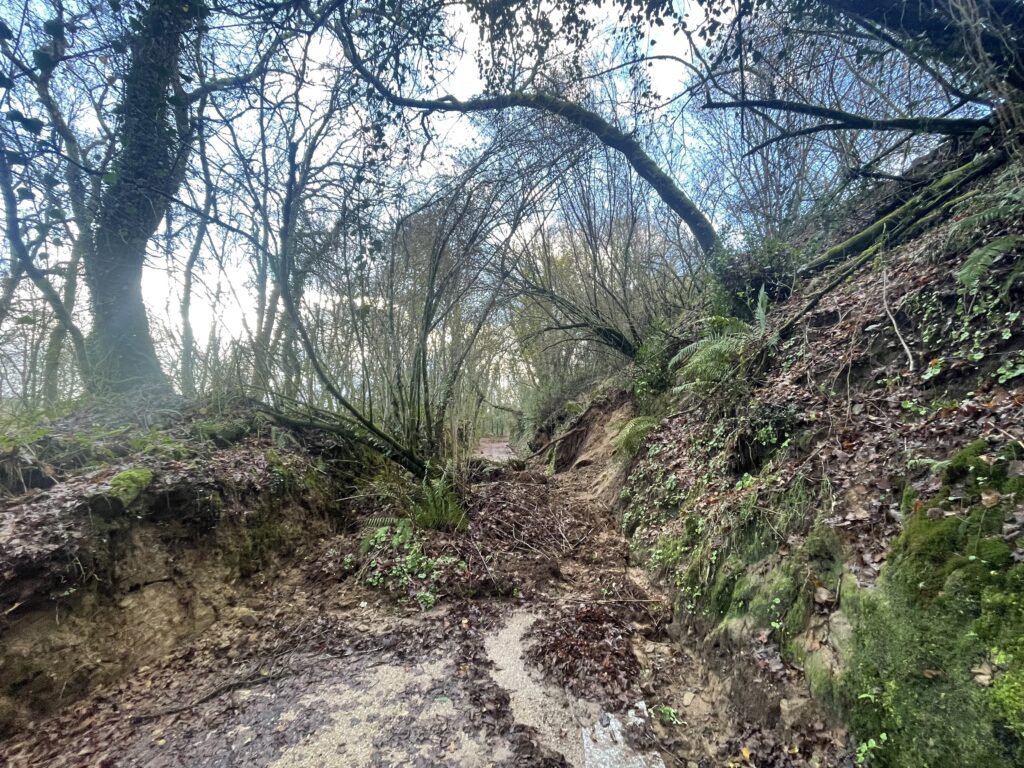
When the going gets muddier.

Navigating a December mud slide on the #CaminoIngles, the English Way.

Read More >


Sorting out wet hiking boots

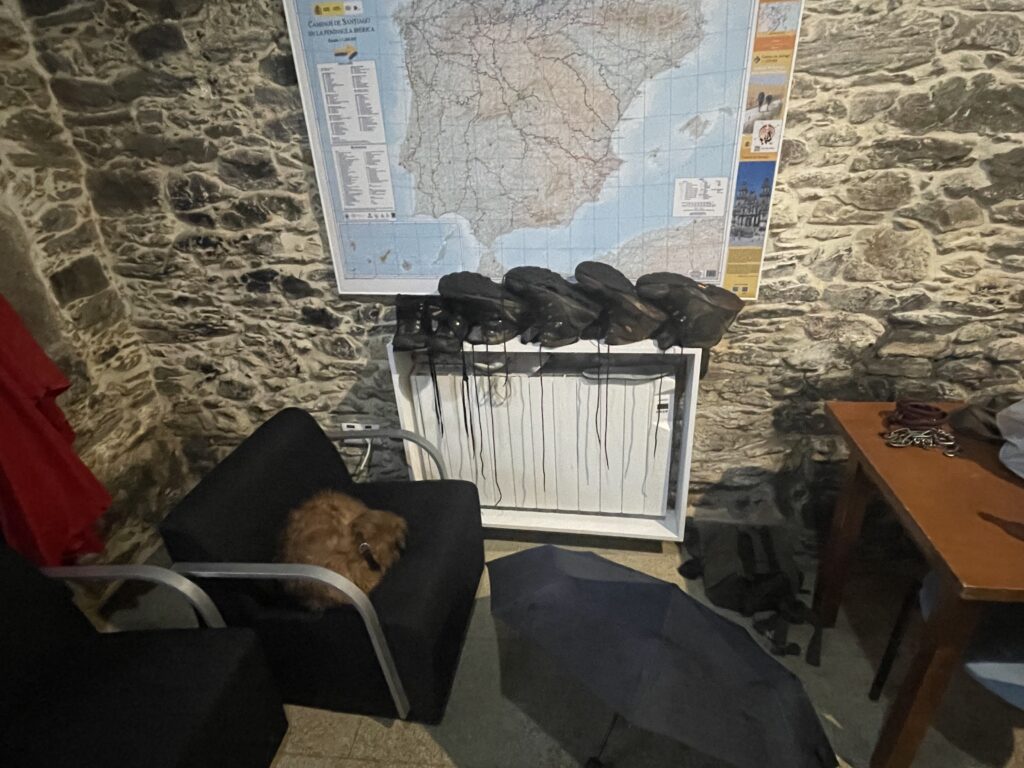
Arriving in the albergue after a rainy day in Galicia.

Wet hiking boots and one wet dog (there are two other wet dogs out of shot) drying off in the albergue at Hospital de Bruma after a soggy day on the #CaminoIngles through #Galicia.

Read More >


The Curious Rhythm of Life in Spain’s Santiago de Compostela

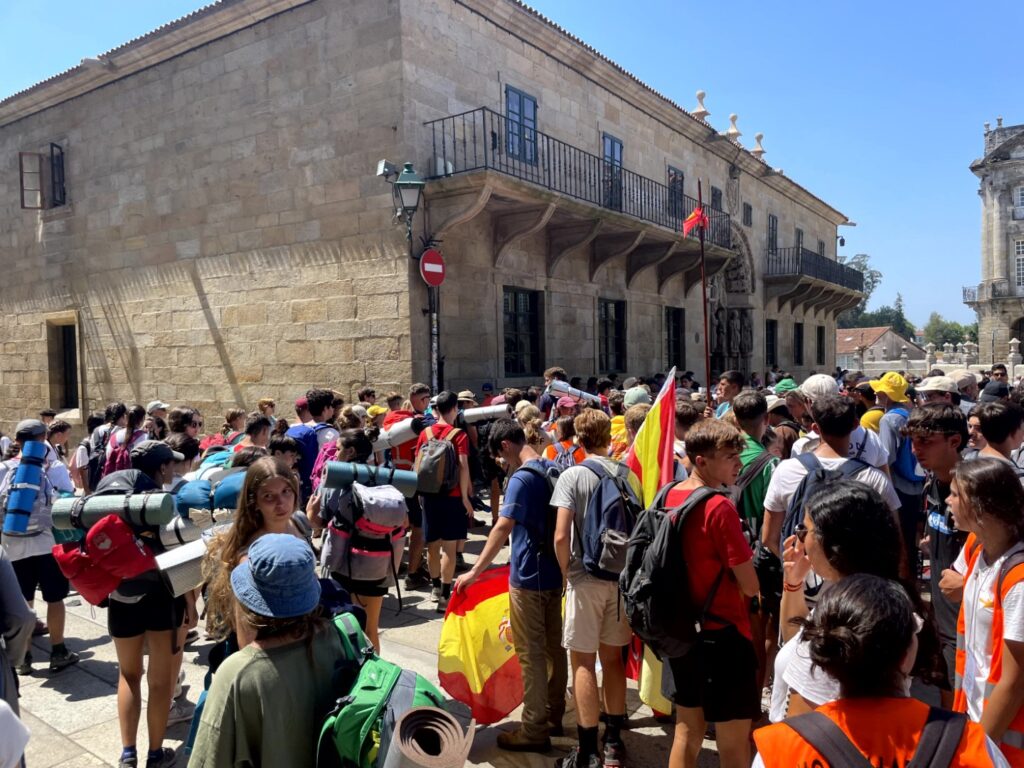
Surely no other city can claim to have so many backpacks and walking sticks on its narrow cobbled streets.

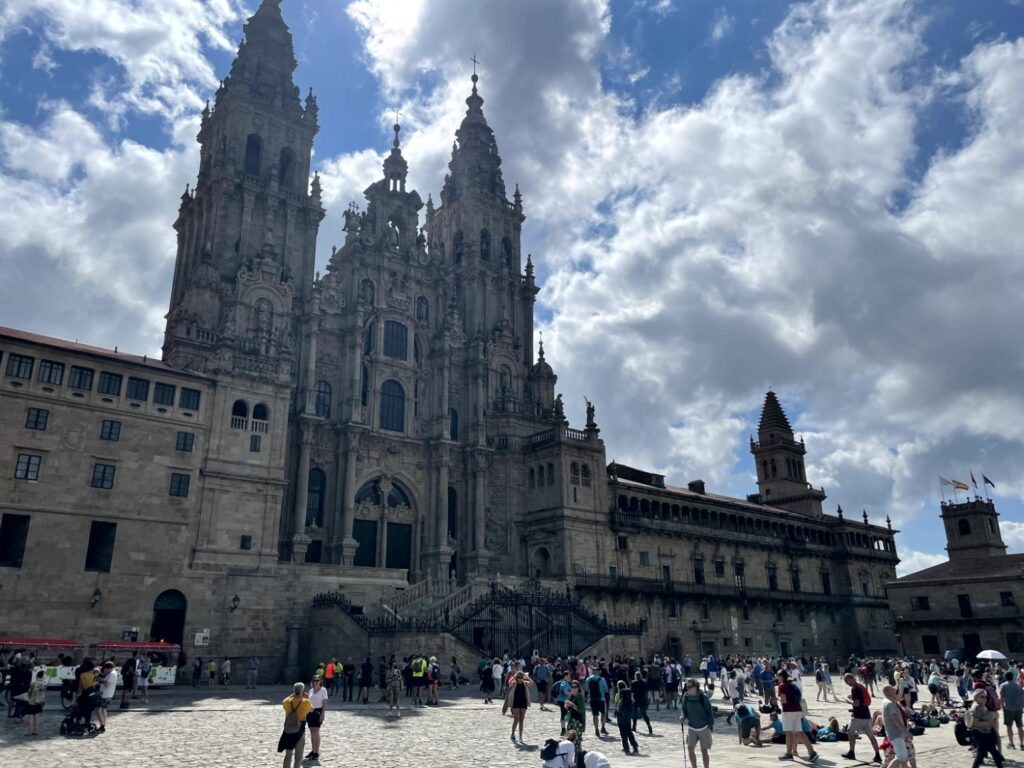
In Spain’s Santiago de Compostela it always looks like there is a giant hiking convention going on. These aren’t your average ramblers, though. They are pilgrims, as the city marks the end of the famous Camino de Santiago pilgrimage.

The Spectator

Read More >


The pagan pleasures of Spain’s Finisterre

This isolated spot on the Galician coast is littered with reminders of a pre-Christian world

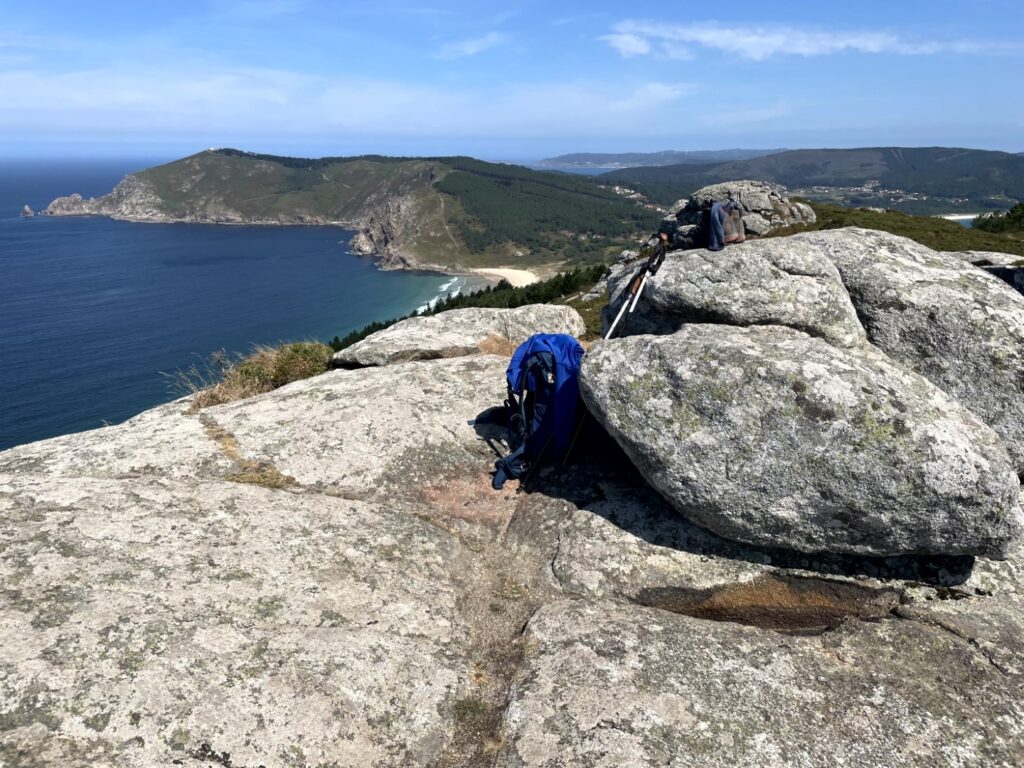
It was starting to feel rather spooky on the pathway to Finisterre. Only two days before I’d been in the celebratory environs of Santiago de Compostela with its endless arrivals of jubilant pilgrims. Now dark clouds were scudding across the Galician hills in the distance and the only sound I could hear was the wind blowing – in an accusatory manner, it seemed – through the trees beside me.

The Spectator

Read More >


Canterbury Tales redux

Pilgrimage still serves to bring people together

Never has the entrance to a former convent seen such pilgrim-induced pandemonium. Only a few moments before everything had all seemed so assured and to be going so well. But I should have known better. Pilgrimage is a contact sport, after all.

It was the end of the first day of the inaugural week-long mini-Camino organised by the Catholic Herald. Months of planning and preparation that I had been involved with appeared to have paid off. Although the pilgrim I was assisting at the rear was struggling with the final few hundred metres, the other nine pilgrims had completed that day’s 11-mile route and could be seen gathered outside the front door to the convent now converted to apartments, as its manager arrived to let us in. I basked in a mixture of pride and relief. It’s a good enough start, I said to myself, as I shepherded the final pilgrim to the door. In less than ten seconds all hell broke loose. 

The Critic

Read More >


A Lament for the Monasteries

As the monastic way of life disappears, the rest of us further lose touch with the spiritual realm that lies beyond our understanding.

Spain’s monasteries offer exquisite examples of the faded glamor of godly things. In the Cistercian Monasterio de Santa María la Real de Oseira in northwestern Spain, I passed from one outdoor cloister beautifully overrun with purple lavender flowers to another with flocks of house martins sweeping around mossy stone pillars while leaving a lot of avian poop on the stone tiling.

On the monastery’s second floor, I unwittingly strayed from the route laid out for visitors and entered the monks’ private quarters. A young brother approached me to politely point out my indiscretion and guide me back to the official route. He spoke good English and, on the way, as we passed giant stone staircases and hallways, he described that there were nine monks living in the sprawling monastery; there were 150 in its heyday. A 2018 New York Times article notes that the number of Catholic brothers in the U.S. has declined by more than two-thirds since 1965, according to the Center for Applied Research in the Apostolate. 

Read More >


Walking the Camino during Covid’s End of Days

When the lockdowns and travel bans wouldn’t end, an ancient pilgrimage offered the only escape

Before the Portuguese police officer told me I couldn’t walk across the border into Spain, the only other time I had been stopped from crossing a border was when I tried to go from northern Ethiopia into Eritrea. That time had been in the role of a journalist, and I wasn’t entirely surprised with the rebuttal given Eritrea is ruled by an authoritarian government. At the Portugal-Spain border, I was trying to cross as a Camino pilgrim. Even though it was the middle of the pandemic and the border was technically closed, locals were allowed to cross for “essential” work, and I’d reasoned the police—who I estimated probably were Catholic themselves—might look sympathetically on a lone pilgrim. Unfortunately, there was to be no bending of the rules even when going forth in the name of Saint James.

Catholic World Report

Read More >


The thirstiest Camino of them all

Few pilgrims who attempt the Camino have heard of the Via de la Plata, fewer still have walked it

At 620 miles (1,000 km), it is the longest and loneliest of the Camino routes, crossing the Iberian Peninsula to Santiago de Compostela. As much of it is under the baking sun of southern Spain, it can also be the thirstiest, as I discovered last summer.

Catholic Herald

Read More >


Pilgrimage resonates with Jews as well as Catholics like myself

Modern life can make us feel strangely isolated and suffocated. Walking for spiritual reasons can be a universal balm

The legend of the Wandering Jew is about the man who taunted Jesus on his way to the crucifixion. Cursed to walk the Earth until the Second Coming, the Wandering Jew could never attain rest and repose.

I’ve felt a bit like the Wandering Jew myself since last August when I set off on the 1,000-year-old Camino pilgrimage through northern Spain, to escape lockdowns in the UK. With further Covid-related travel restrictions making a return to Britain impractical, I continued on past the city of Santiago de Compostela in northwest Spain that marks the end of the pilgrimage toward the coast, then pivoted south to head towards Lisbon in Portugal, following another Camino route in reverse. As I passed the 2,000-kilometre mark, I began to wonder if my odyssey would ever end.

The Jewish Chronicle

Read More >


Confessions of a religious pilgrim

By the time I reached Lisbon, with the staccato rap of my walking sticks on the quayside causing the trendy young things watching the sunset to turn heads my way, I felt pretty confident that I had achieved “dirty pilgrim” status

By the time I reached Lisbon in February this year, with the staccato rap of my walking sticks on the quayside causing the trendy young things watching the sunset to turn heads my way, I felt pretty confident that I had achieved “dirty pilgrim” status.

Behind me and the Portuguese capital lay more than 1,000 miles of an extended Camino de Santiago, the ancient pilgrimage trail stretching from the French Pyrenees to the city of Santiago de Compostela in north-western Spain’s Galicia region. It was a long way off from my religious upbringing at Ampleforth.

Catholic Herald

Read More >


Down Santiago Way

The Camino de Santiago is no normal pilgrimage

Hiking toward the Spanish border on my second day after setting off from Bayonne, I set down my backpack on a grassy patch beside a beach. It was bloody hot — August in the southwest of France — and the sight of beachgoers taking a shower had a cooling appeal.

I stripped to my underwear and enjoyed the bracing shower burst. Then I looked down. Water was cascading over what looked like leprosy, breaking out over the right side of my chest. Feeling self-conscious, I got dressed and plodded on. Twenty-five miles later, at the sparkling city of San Sebastián, the pain proved too much. I lifted my shirt to two Portuguese pharmacists — and they pointed me toward the nearest hospital.

Spectator

Read More >


Seville’s ancient alchemy of agony and ecstasy

You can’t move in the capital of southern Spain’s quixotic Andalusia region without encountering the striking blend of Catholic suffering and jubilation that Seville seems determined to wear on its sleeve.

Goodness knows what non-Catholics, let alone atheists, must make of it all when visiting Seville. You can’t move in the capital of southern Spain’s quixotic Andalusia region without encountering the striking blend of Catholic suffering and jubilation that Seville seems determined to wear on its sleeve. I couldn’t help noticing it during a month-long stay at a hostel on the thoroughfare of Calle Reyes Católicos in the heart of the city, after my knees and back began telling me it was time to take a break from my extended Camino de Santiago pilgrimage that had hurtled past the 2,000km mark.

Catholic Herald

Read More >

My taste of lockdown freedom on the Camino pilgrimage

The gaze of my eyes was increasingly unhinged; one friend cautioned similarities to King Lear

Afew of the hip young things sitting along the Lisbon quayside turned their heads my way as my walking sticks scraped along the pavement. I didn’t slow down, though, because I was self-conscious about how I looked. Hiking 2,000km along an extended Camino pilgrimage from the French-Spanish border through northern Spain then down through Portugal will do that to you. My beard had gone feral, my greying hair was out of control. The gaze of my eyes was increasingly unhinged; one friend cautioned similarities to King Lear. Nevertheless, I tried to hold my head high. Little do you know (I silently said to the quayside beauty pageant), but this apparent vagrant used to be an officer in one of Her Majesty’s finest cavalry regiments.

Spectator

Read More >


Confessions of a dirty pilgrim

It doesn’t always pay to follow the most organised and efficient path

Perhaps it was all those years at Ampleforth College under the tutelage of Benedictine monks, but I can’t deny that when I meet a woman with a striking Biblical name, or who is named after one of the New Testament’s main female protagonists, I find it a bit of a turn on.

But enough of my peccadillos, and I must be upfront with the reader—perhaps drawn here as compensation for the sexless, touchless, mirthless times we are being forced to live through—and confess that this article wouldn’t be as salacious as the title suggests; I wish it could be.

The Critic

Read More >


The Making of a Modern Pilgrim

The Camino de Santiago is a pilgrimage like no other, defying conventional wisdom about what constitutes a pilgrim, and about the supposedly unavoidable schism between religion and humanism

THE CAMINO DE SANTIAGO across the mighty pastoral breadth of northern Spain is no normal pilgrimage. Nonbelievers match if not outnumber the religiously inspired on this epic journey (camino means “journey” in Spanish). But regardless any theological disputes, participants are united by more than what divides them. I heard people continually lament the same problems and trappings of modern society, and of undertaking the Camino to gain thinking space amid the tumult.

The Humanist

Read More >