Santiago to Finisterre and Muxia Route
Key Facts
Camino: The Camino Finisterre
Distance: 116km / 72 miles
Duration: 8-9 days
Miles per day: 9 - 17.6
Dates: TBC
Price per person: TBC
Summary

This route is an official Camino in itself - the Camino Finisterre - and it is the only Camino that departs from Santiago (all the others ends there, of course). Both the routes to Finisterre and then onto Muxia are uniquely beautiful. Despite its current affiliation with the Camino de Santiago, the Camino Finisterre route likely predates Christianity itself. It is believed that pagan pilgrims made their way to Finisterre on Galicia’s Costa da Morte—the Coast of Death—to pay homage to what was viewed in ancient times as the extremity of the known world, beyond which lay—they hoped—the likes of Elysium and the Land of Eternal Youth. There remain hints and signs of this pagan past along the route and around Finisterre itself. Muxia is a traditional pilgrimage spot in its own right, as it houses the Santuario da Virxe de Barca—the Sanctuary of Our Lady of the Boat—occupying a stunning location bordered by the waves of the Atlantic Ocean. The sanctuary honours the legend that the Virgin Mary came to Muxia in a boat made of stone to help Saint James during his ministry in Spain.
Itinerary and Route
Day 1: Fly to Santiago
Day 2: Santiago de Compostela to Negreira - length: 21.2 kms / 14 miles
Day 3: Negreira to A Picota - length: 28.4 kms / 17.6 miles
Day 4: A Picota to Cee - length: 26.1 kms / 16.2 miles
Day 5: Cee to Finisterre (including Faro lighthouse) - length: 21 kms / 13 miles
Day 6: Finisterre to Lires - length: 13.5 kms / 15 miles
Day 7: Lires to Muxia – length: 14.6 kms / 9.07 miles
Day 8: Bus back to Santiago and flight home/option to stay the night in Santiago
Day 9: (optional): Fly back from Santiago

Highlights of Route
The first day’s hike to Negreira follows natural pathways and is particularly pretty, crossing a number of streams and rivers. This includes passing over the magnificent medieval bridge of Ponte Maceira. Legend has it—with shades of the Red Sea biblical story—that God destroyed the bridge in a single stroke to prevent Roman soldiers based at Duio (near Finisterre) pursuing the entourage of Saint James.

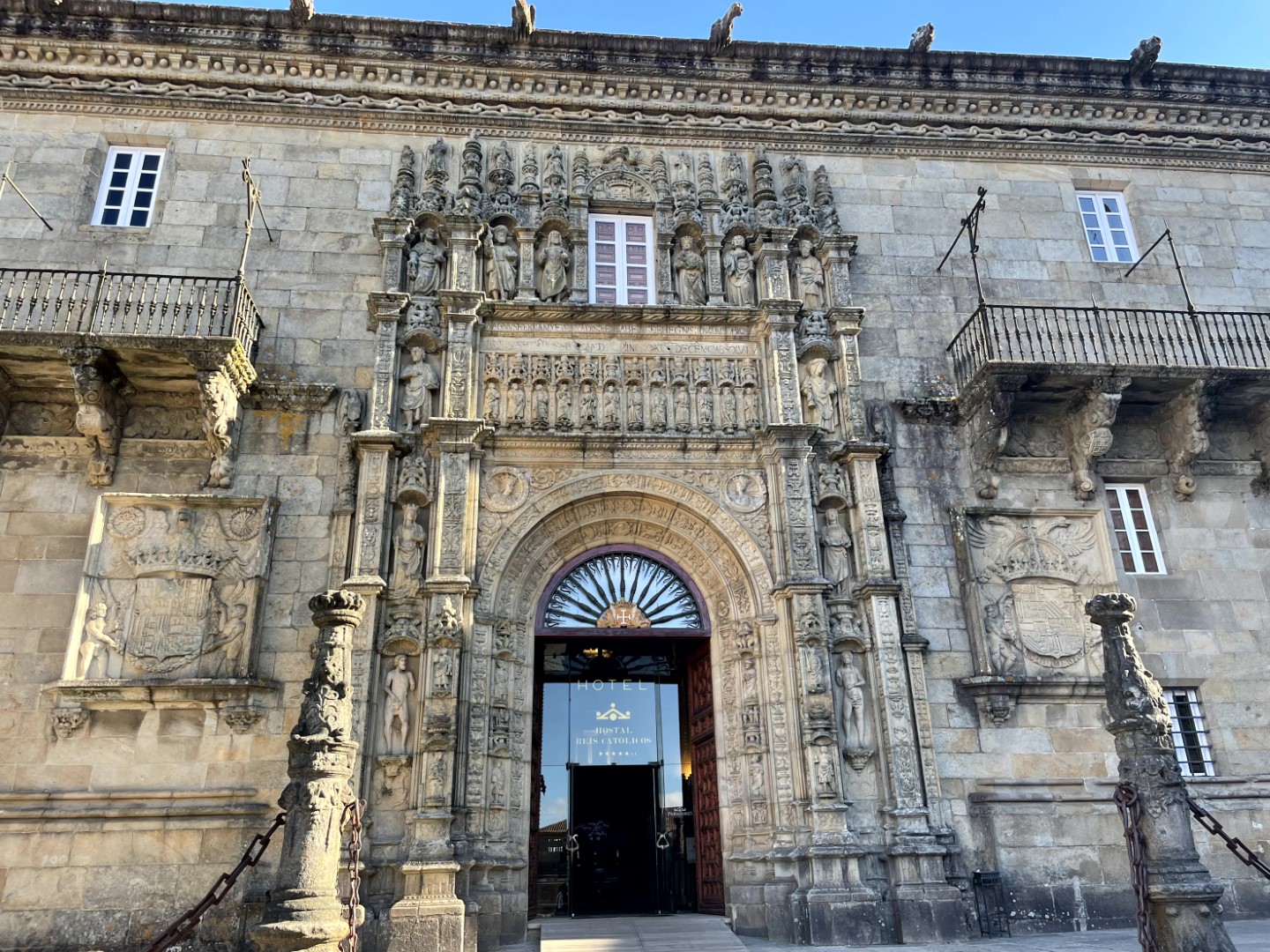

Negreira is an attractive small town beside a river. There are plenty of bars, cafes and restaurants providing good sustenance and very reasonably priced menus de dia offering three courses for 11 – 12 euros. There are a number of historic buildings of note, along with interesting statues and a picturesque, shaded square near the river.
The final few kilometres to A Picota include an ascent to 495 meters and a vantage point providing fantastic panoramic views of the surrounding lush countryside.
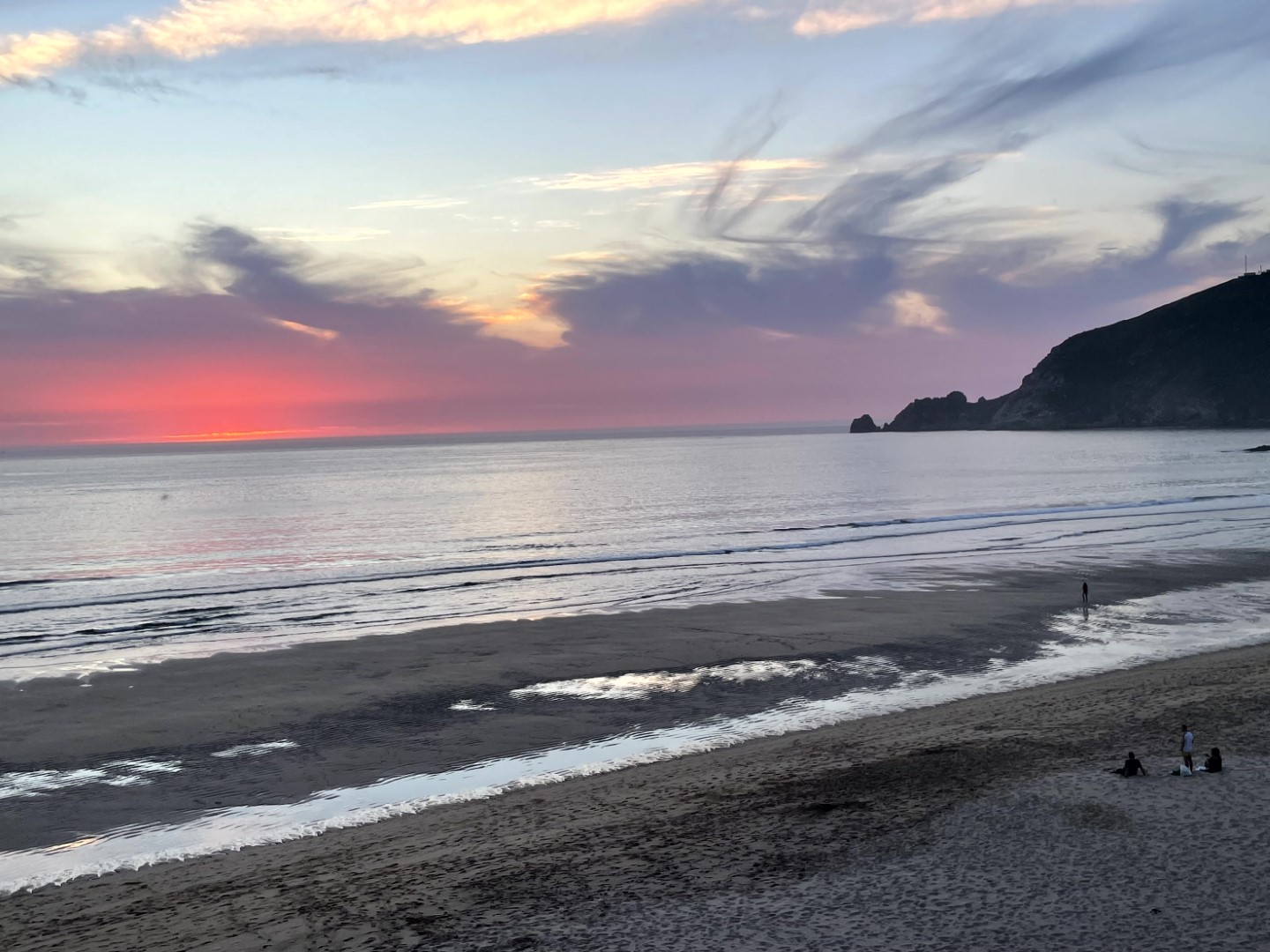


Looking out over the ocean, Cee is a bustling commercial town serving the local fishing and industrial port. It lies cheek by jowl with the attractive seaside town of Corcubión. Both towns contain reminders of their historic pasts in the form of various historic buildings, monuments, churches, and atmospheric narrow winding streets.
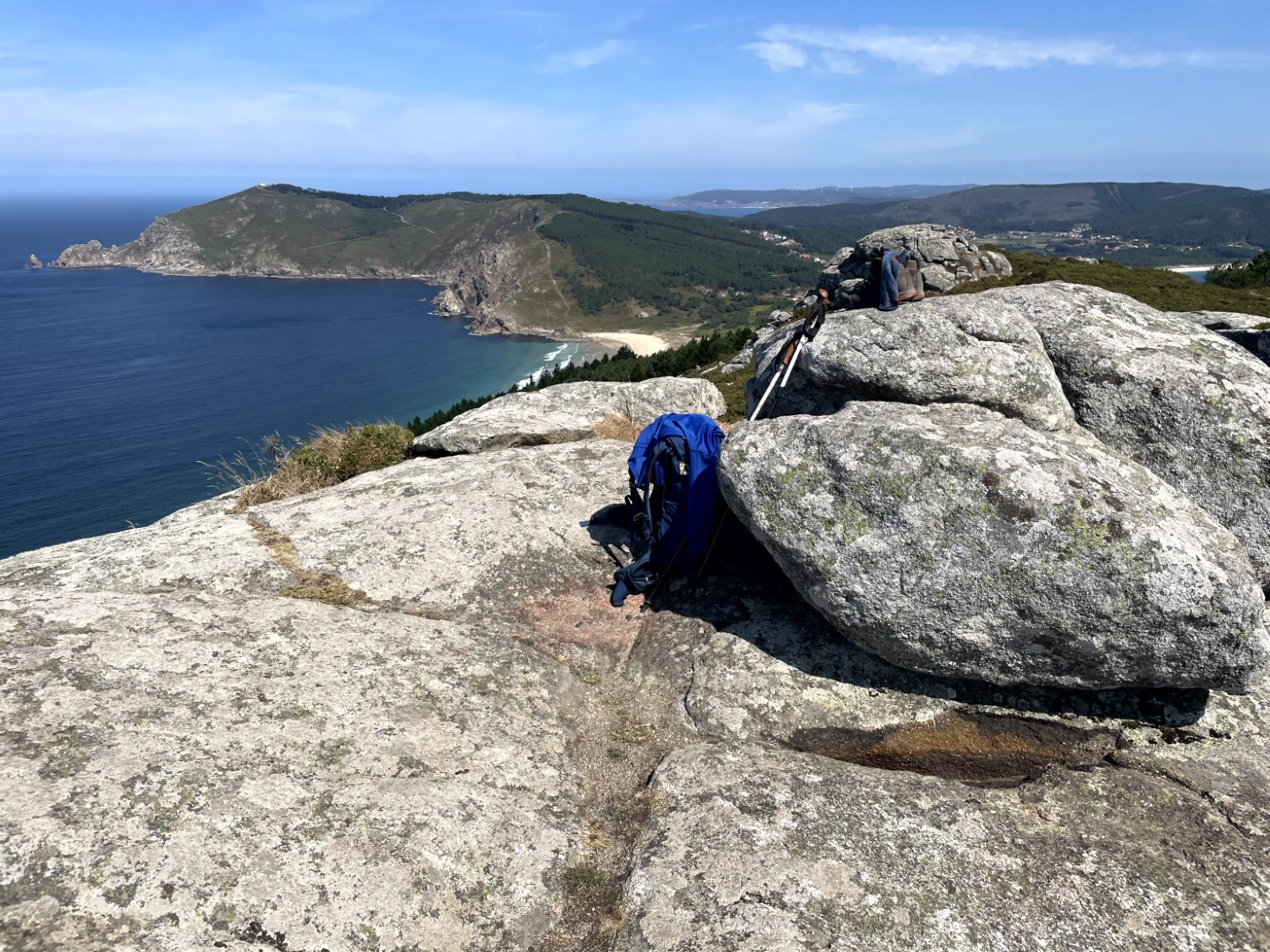
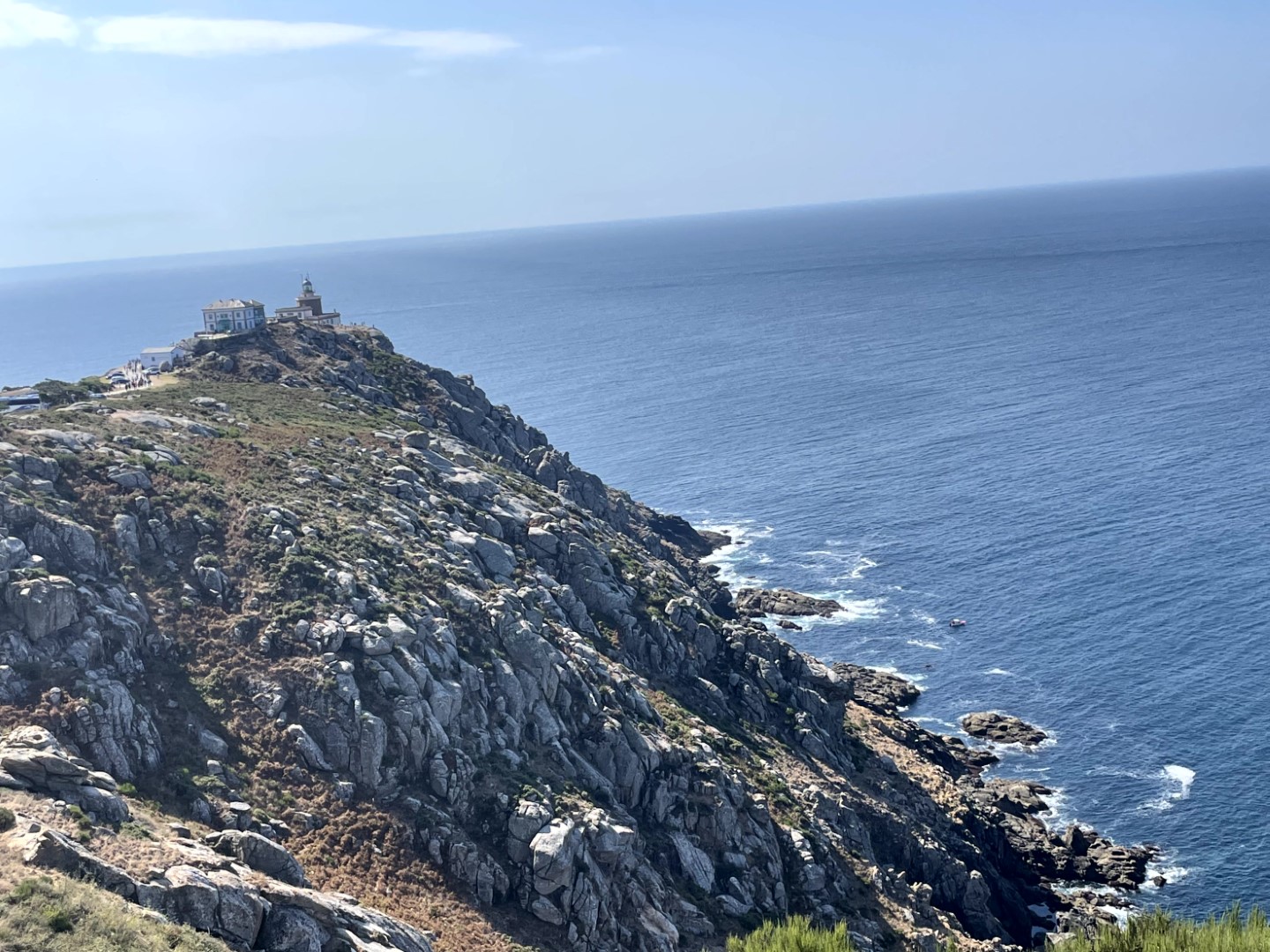
Finisterre abounds in both stunning landscapes and local legends. These range from the fabled Faro lighthouse overlooking the expanse of the Atlantic Ocean; to the peninsula’s highest point known as Monte Facho, where you encounter the rocky outcrop of Ara Solis—the Altar to the Sun—with its Piedras Santas sacred stones used for ancient rites; to Praia do Mar de Fora, a beach that exemplifies the untamed beauty and purity of light that suffuses this remote part of north-western Spain.

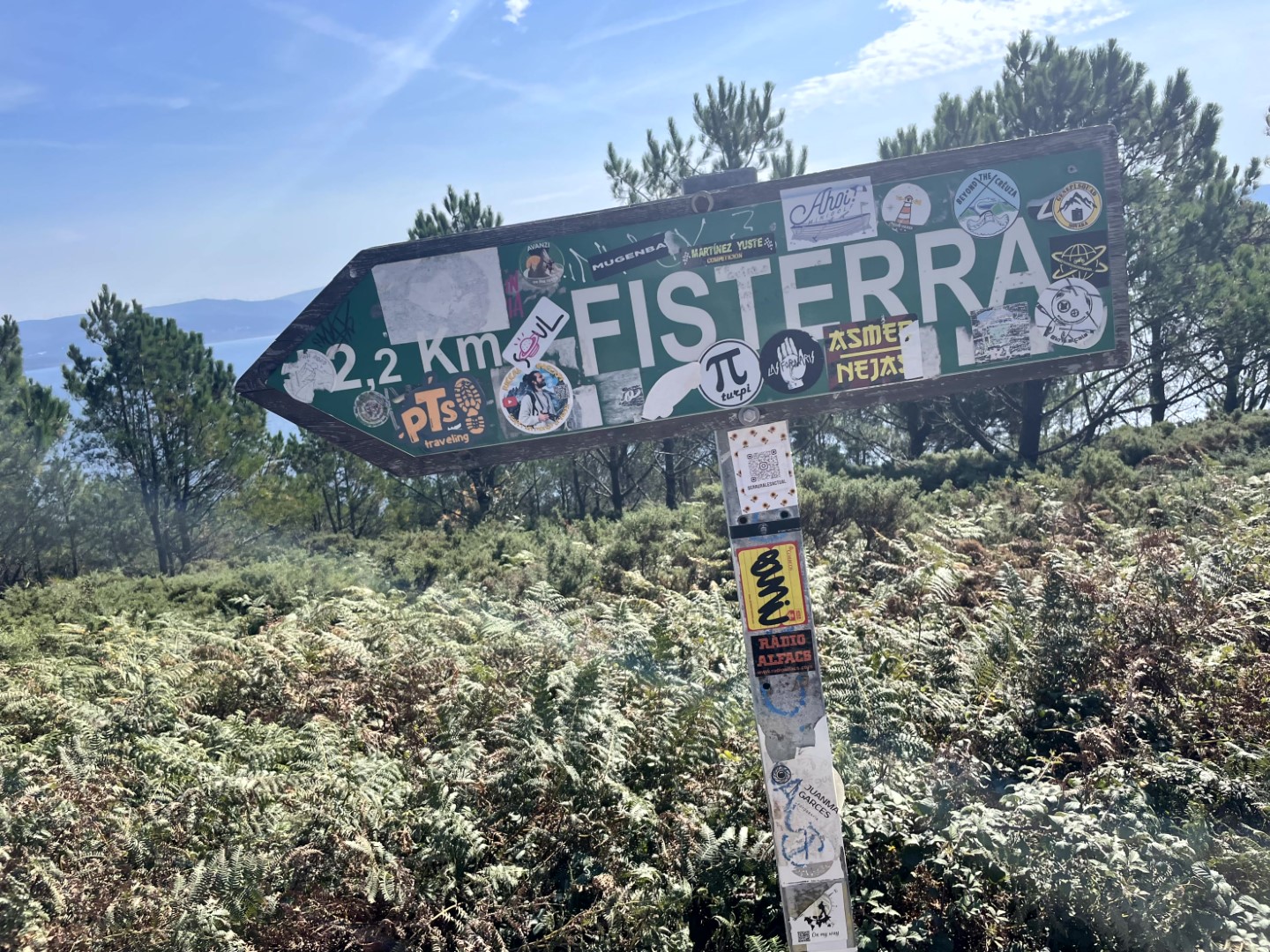

Spain’s northwest region of Galicia that this route passes through remains an enigmatic treat, with a starkly unique and independent character from the rest of Spain. It’s lush landscape calls to mind the hills of Ireland. You often encounter Celtic crosses, and you might even hear the bagpipes being played.
The route to Finisterre and the peninsula on which it lies are littered with reminders of its pre-Christian era. These range from 4,000-year-old stone carvings beside the Camino trail, to mámoa and dolmen burial mounds and tombs comprising large megalithic stones dotting the desolate landscape.

Eating and drinking in Galicia is a great experience, as well as great value. The regions coastline bequeaths a regional cuisine rich in fish and seafood—the region is famed for its fried pulpo (octopus). The local beer and wine are excellent too and most reasonably priced.
Related Articles
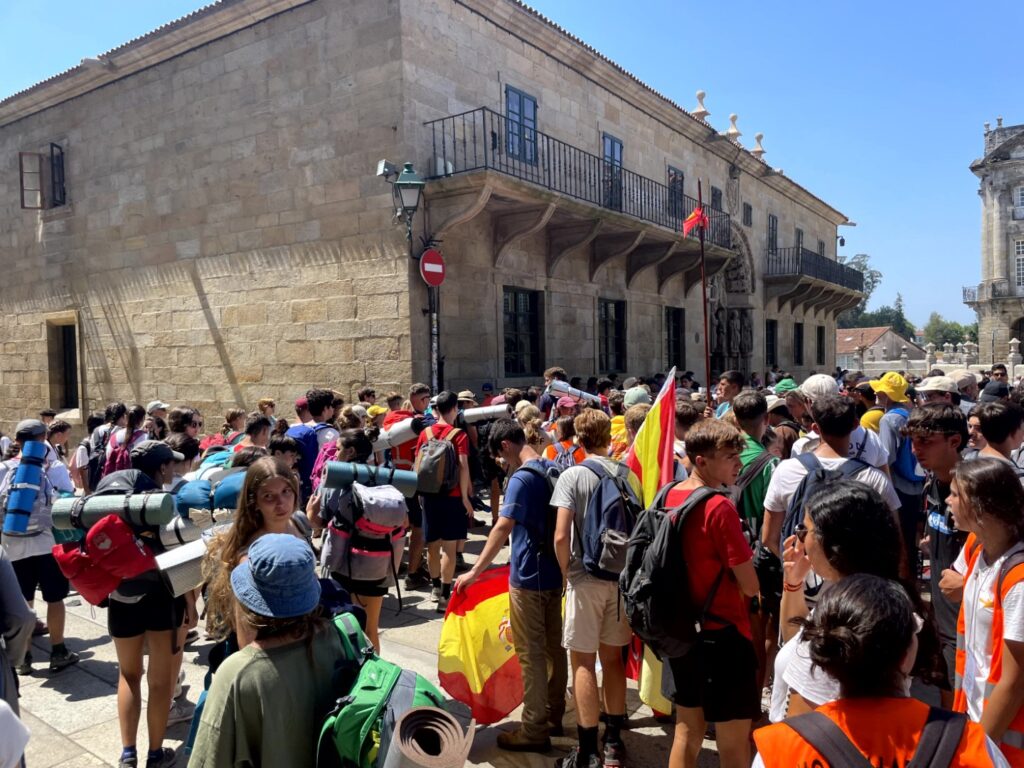
The Curious Rhythm of Life in Spain’s Santiago de Compostela
Surely no other city can claim to have so many backpacks and walking sticks on its narrow cobbled streets.
In Spain’s Santiago de Compostela it always looks like there is a giant hiking convention going on. These aren’t your average ramblers, though. They are pilgrims, as the city marks the end of the famous Camino de Santiago pilgrimage.
The Spectator
Read More >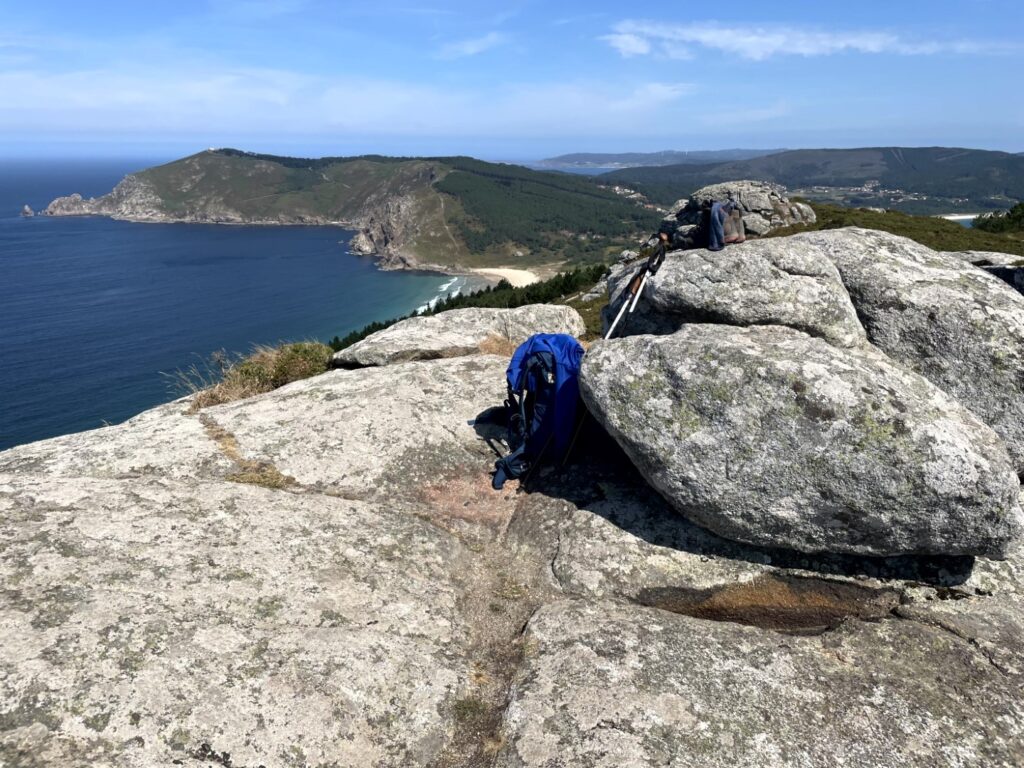
The pagan pleasures of Spain’s Finisterre
This isolated spot on the Galician coast is littered with reminders of a pre-Christian world
It was starting to feel rather spooky on the pathway to Finisterre. Only two days before I’d been in the celebratory environs of Santiago de Compostela with its endless arrivals of jubilant pilgrims. Now dark clouds were scudding across the Galician hills in the distance and the only sound I could hear was the wind blowing – in an accusatory manner, it seemed – through the trees beside me.
The Spectator
Read More >